key Spring Hiking Tips for Beginners: A Complete Trail Guide

Spring hiking hits different. After months of snow and slush, the trails are calling—but they come with their own set of challenges. This guide covers everything needed to hike safely and comfortably during mud season: what to wear when temperatures swing wildly, how to read trail conditions, gear that actually matters, and where to find beginner-friendly routes near Burlington. Whether it's the first time lacing up boots or just the first hike of the season, these tips will keep you dry, stable, and smiling on the path.
What Should Beginners Wear for Spring Hiking?
Layering isn't optional in spring—it's survival. Mornings can start at 2°C with frost on the ground, and by noon you're peeling off jackets in 18°C sunshine. The trick is building a system that adapts without stopping every twenty minutes.
Start with a merino wool base layer. Smartwool's Classic All-Season Merino crew handles temperature swings better than synthetic alternatives, and it won't reek after a few hours of sweating. Merino naturally wicks moisture away from skin—critical when you're working hard uphill but don't want to freeze during breaks.
The mid-layer is where most beginners go wrong. Skip the thick fleece. A lightweight synthetic puffy like the Patagonia Nano Puff packs down small when unzipped, but adds real warmth when the wind picks up on exposed ridges. Here's the thing: you'll probably stuff it in your pack by 10 AM. That's fine. Better to carry it than shiver.
For the outer shell, look for something waterproof but breathable. The Marmot PreCip Eco Jacket hits a sweet spot—affordable, reliable, and light enough that you won't curse carrying it. Spring means surprise showers. Always.
Bottoms matter too. Avoid cotton jeans (they stay wet forever). The prAna Stretch Zion pant handles mud, resists light rain, and moves with you over rocks. Some hikers prefer convertible zip-off styles—personal preference, but they work.
Don't forget extremities. A Buff Original neck gaiter protects against wind and can soak up sweat. Lightweight liner gloves (Outdoor Research ActiveIce) handle chilly starts without bulk. And sunglasses—spring sun reflecting off lingering snow patches is blinding.
How Do You Choose the Right Spring Hiking Trail?
Pick trails that drain well and avoid sensitive alpine zones. In spring, elevation matters less than aspect—south-facing slopes dry out weeks before north-facing ones. A trail at 200 metres on a sunny ridge might be bone dry while a shaded valley loop at the same elevation remains a muddy mess.
The Bruce Trail near Burlington offers excellent beginner options with varied terrain. The Iroquoia section between Kelso Conservation Area and Mount Nemo features limestone paths that shed water quickly—far better than clay-heavy trails that turn into Slip 'N Slides. The Conservation Halton website posts real-time trail conditions worth checking before heading out.
For a gentler introduction, the Royal Botanical Gardens' trails provide well-maintained paths with minimal elevation gain. The Cherry Hill Gate loop (3.2 km) lets beginners test gear and stamina without committing to a full day. Plus, spring wildflowers here—trilliums, trout lilies, spring beauties—peak in late April through May.
Worth noting: some trails close seasonally to prevent erosion damage. The popular Crawford Lake loop enforces spring closures when conditions get too muddy. Respect these closures—damaged trails take years to recover, and fines apply.
| Trail Name | Distance | Difficulty | Spring Condition Notes |
|---|---|---|---|
| Iroquoia Bruce Trail (Kelso to Mount Nemo) | 8.5 km | Moderate | Drains well; watch for ice on north-facing sections |
| RBG Cherry Hill Gate | 3.2 km | Easy | Paved sections; excellent for wet spring days |
| Hilton Falls Conservation Area | 4.0 km | Easy-Moderate | Can be muddy near the falls; microspikes helpful |
| Rattlesnake Point | 7.2 km | Moderate | Rocky terrain stays drier; stunning escarpment views |
What Gear Do Beginners Actually Need for Spring Hiking?
Start with footwear that grips. Spring trails are slippery—mud, wet leaves, residual ice. The Merrell Moab 3 Mid WP remains the go-to beginner boot: waterproof, supportive, and widely available around $150. Break them in before hitting the trail—blisters ruin hikes faster than any weather.
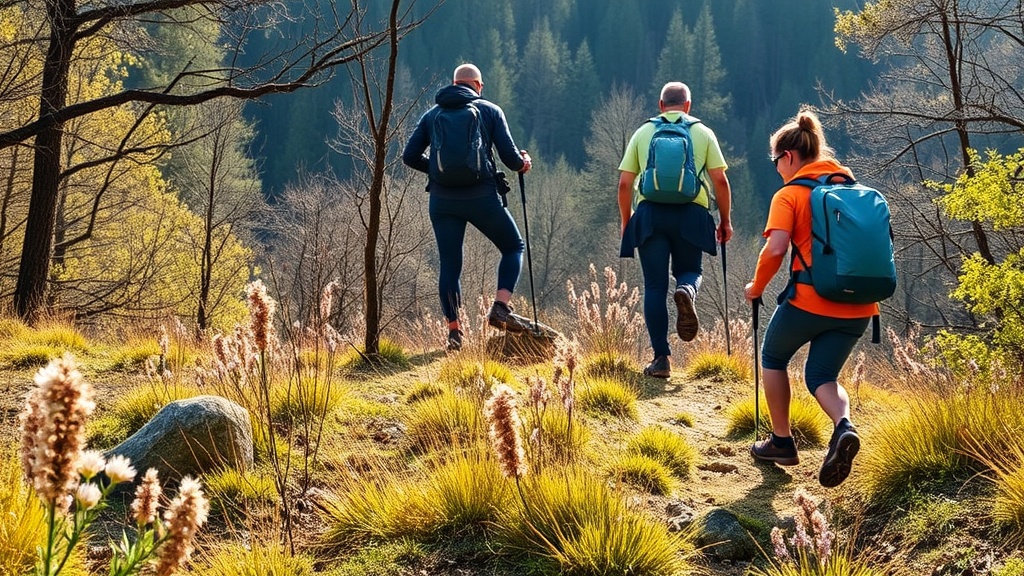
Trekking poles aren't just for old knees. In spring, they provide critical stability on uneven, slick terrain. The REI Co-op Trailmade Trekking Poles collapse small enough to strap to a pack when not needed, and the carbide tips bite into muddy slopes. Adjust them so elbows form 90-degree angles when standing—this maximizes push-off power on climbs and braking control on descents.
A proper daypack distributes weight to hips, not shoulders. The Osprey Daylite Plus (20L) swallows extra layers, snacks, water, and emergency gear without bouncing around. Look for a pack with a hip belt—even a simple webbing one takes significant load off your back during a 4-hour hike.
Navigation tools matter more in spring when trail markers can be obscured by downed branches or snow. Download offline maps through AllTrails Pro before leaving cell range. The app shows elevation profiles that help gauge effort—surprisingly useful when post-holing through unexpected snow patches.
Pack these essentials regardless of "just a quick hike" thinking:
- Headlamp (Petzl Tikkina—cheap, reliable, 250 lumens)
- First aid kit with blister pads (moleskin or Leukotape)
- Emergency shelter (SOL Emergency Bivy, 100g, packable)
- Fire starter (waterproof matches or ferro rod)
- Extra food beyond planned needs
- Minimum 2 litres water (more on warm days)
The catch? Most beginners overpack clothing and underpack emergency gear. A heavy pack slows you down; being unprepared for a twisted ankle 5 km from the trailhead is worse.
How Do You Stay Safe Hiking in Unpredictable Spring Weather?
Spring weather changes fast. A bluebird morning can deteriorate into driving sleet by afternoon—especially along the Niagara Escarpment where lake-effect systems linger. Check Environment Canada's hourly forecast for the specific trail location, not just Burlington proper. Elevation and proximity to Lake Ontario create microclimates that differ significantly from city conditions.
Start early. Not only does this provide daylight buffer if things go sideways, but frozen morning trails often firm up before melting into afternoon slop. That said, don't rush—tired legs make poor decisions on technical descents.
Stream crossings deserve respect in spring. Snowmelt swells creeks that were stepping-stone hops in summer. If water runs fast and opaque, find an alternative crossing point downstream or turn back. Wet boots are annoying; being swept off your feet is dangerous. Trekking poles provide a third and fourth point of contact—use them.
Hypothermia remains a real risk even in mild temperatures. Wet clothing plus wind plus stopped exertion (say, during a navigation error or injury) drops core temperature rapidly. The "stop and drop" rule: if you stop moving for more than 10 minutes, add a layer immediately. Don't wait until cold.
"The best spring hike is the one where you packed for winter and peeled layers, not the one where you packed for summer and shivered."
Inform someone of your planned route and expected return. The AdventureSmart Trip Plan tool generates detailed itineraries you can email to a contact. If you're not back within a reasonable window, they know where to direct search teams.
How Should Beginners Prepare Physically for Spring Trails?
Winter inactivity hits hard. Those first spring hikes feel tougher than remembered—not because the trails changed, but because fitness declined. Start with shorter distances and build gradually. The "10% rule" (increasing weekly mileage by no more than 10%) prevents overuse injuries that bench you for weeks.
Trail hiking uses different muscles than road walking. Uneven terrain activates stabilizers in ankles, knees, and hips that lay dormant on flat sidewalks. Before tackling rugged Bruce Trail sections, walk local paths at Paletta Lakefront Park or the Burlington waterfront to reactivate those muscles.
Stretch dynamically before hiking—leg swings, walking lunges, arm circles. Static stretching cold muscles increases injury risk. Save deep stretches for post-hike when muscles are warm.
Pace yourself. Spring hiking often involves post-holing through residual snow, slogging through mud, or handling around blowdown. These conditions burn more calories and require more effort than summer equivalents. A 5 km spring hike might feel like 8 km in July—adjust expectations accordingly.
Hydration matters even when it's cool. Cold air is dry air, and working hard under layers creates significant sweat loss. Drink regularly—before thirst hits. The CamelBak Crux reservoir makes sipping easy without stopping, though some hikers prefer bottles for easier winterizing (reservoir tubes can freeze in near-zero temperatures).
Trail Etiquette for Mud Season
Spring trails are vulnerable. Saturated soil compacts easily, and footsteps create channels that erode into gullies. The golden rule: hike through mud, not around it. Skirting muddy sections widens trails and damages fragile vegetation. Embrace wet boots—it's part of the season.
Stay on marked trails. Spring is when ground-nesting birds (ovenbirds, wood thrushes) establish territories along the escarpment. Bushwhacking disrupts breeding and damages ephemeral wildflower populations that take years to recover.
Yield appropriately: uphill hikers have right-of-way (they're working harder), but solo hikers yield to groups, and everyone yields to equestrians where shared trails exist. The Bruce Trail has several sections open to horses—know before you go.
Pack out everything. Spring melt reveals the ugly truth of winter—dog waste bags left trailside, snack wrappers blown from pockets, discarded gel packets. Leave no trace means carrying out apple cores and orange peels too (they don't decompose quickly in Ontario's climate and attract wildlife to trails).
Spring hiking rewards preparation with empty trails, emerging wildlife, and that particular green-gold light filtering through new leaves. The mud, the uncertainty, the extra gear—it all fades when you round a bend and spot the year's first trillium pushing through leaf litter. Start small. Start prepared. The trails will wait.